



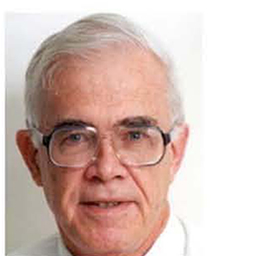
Professor Michael Ewart Brown
It is with great sadness that we have to inform you that Professor Michael Brown, the former ICTAC Secretary and founder member of the South African Thermal Analysis Group, passed away on Friday 31st May 2019, after a long and courageous battle with cancer.
Mike was an exceptional ICTAC Secretary over a period of some ten years and he fulfilled many other roles within ICTAC including Publications Chairman, Affiliate Councillor, Leader of the ICTAC Kinetics Project, and was a valued member of the Nominations Committee, Travel Fund Committee and Awards Committee. In all these positions he gave exemplary and unstinting service, while always displaying tact and good humour, even under difficult circumstances. His outstanding contribution to ICTAC was recognised by the ICTAC Distinguished Service Award in 2008 and by the ICTAC Honorary Lifetime Membership in 2018. In his retirement, he was able to devote more time to his hobby of woodworking and a number of ICTAC Presidents (including those signing this obituary) were delighted to receive a gavel and sounding board, finely crafted from African hardwood, on taking office. These now form a priceless reminder of their good friend.
He spent the majority of his working life at Rhodes University, becoming Professor of Physical Chemistry and Dean of Science in 1986. He was a research scientist of exceptional ability, specialising in the decomposition of inorganic solids and the kinetics of solid-state reactions, and published over 130 papers and 5 books. His contribution to the field of solid-state kinetics and his fruitful collaboration with Professor Andrew Galwey of Queens University Belfast was recognised by a special edition of Thermochimica Acta in 2002 and their book “Thermal Decomposition of Ionic Solids” has become a standard work in the field. His dedicated service to the University was recognised by Vice-Chancellor’s Distinguished Senior Research Award in 1998 and after his retirement he was made a Distinguished Fellow of Rhodes University.
Mike was also an outstanding communicator and the two editions of his book “Introduction to Thermal Analysis - Techniques and Applications” have provided countless thermal analysts with their first introduction to the field.
His work has been recognised by a number of awards including the Mettler Outstanding Achievement Award of the North American Thermal Analysis Society in 1996. The exactness, common sense and humour of the excellent Award lecture on kinetics that he delivered in Philadelphia is still in the memory of many participants at this ICTAC Congress. He also received the South African Chemical Institute's Gold Medal in 2000 and the NATAS Fellowship in 2003.
In spite of his many achievements, Mike was remarkably modest and his kindness and quiet sense of humour made him the best of company. He will be greatly missed by his many friends and colleagues worldwide. Our thoughts and heartfelt condolences go out to his wife Cindy and her family.
Edward Charsley and Jean Rouquerol
Thermal analysis is an important area in the South African scientific and industrial landscape and services a diverse range of industries including mining, petrochemical, pharmaceutical, materials testing and much more. ThermSA is a division of SACI devoted to the development of thermal analysis skills in South Africa.
We are lucky to enjoy growing and continued support from all over South Africa but find it increasingly difficult to keep track of interested parties in order to better cater for their needs.
As a member of SACI, you are entitled to nominal membership of two divisions, which allows the division to regularly interact with members. In order to help us improve the service we deliver, please ensure to confirm with SACI that you have selected ThermSA as one of your divisions of choice. The easiest way to do this is to update your membership details using the following link: http://www.saci.co.za/update_membership_details.html
Please take special note of our first members meeting, which will now be held regularly throughout the year.
Kind regards
The ThermSA Committee.
Instrumentation supplier contact details:
Company |
Instrument Type |
Contact person |
Contact details |
Website |
Pra.Ma. |
Hiden Analytical |
Aldo Conti |
contialdo@pra-ma.com |
|
Separation Scientific |
Hitachi |
Shawn Britz |
shawn@sepsci.co.za |
|
Microsep |
METTLER TOLEDO |
Rudy Maliepaard |
Rudy.Maliepaard@microsep.co.za |
|
IMP |
Netszsch |
Dashika Naidoo |
dashika.naidoo@imp.co.za |
|
Perkin Elmer |
Perkin Elmer |
Chris de Jager |
chris.dejager@perkinelmer.com |
|
Advanced Laboratory |
TA Instruments |
Khanya Luthando Ngobo |
khanyan@advancelab.co.za |
Introduction to Thermal Analysis
Thermal analysis is a branch of materials science where the properties of materials are studied as they change with temperature.
Several methods are commonly used - these are distinguished from one another by the property which is measured:
•Differential thermal analysis (DTA): temperature difference
•Differential scanning calorimetry (DSC): heat difference
•Thermogravimetric analysis (TGA): mass
•Thermomechanical analysis (TMA): dimension
•Dilatometry (DIL): volume
•Dynamic mechanical analysis (DMA) : mechanical stiffness & damping
•Dielectric thermal analysis (DEA): dielectric permittivity & loss factor
•Evolved gas analysis (EGA) : gaseous decomposition products
•Thermo-optical analysis(TOA) : optical properties
Simultaneous Thermal Analysis (STA) generally refers to the simultaneous application of Thermogravimetry (TGA) and Differential scanning calorimetry (DSC) to one and the same sample in a single instrument. The test conditions are perfectly identical for the TGA and DSC signals (same atmosphere, gas flow rate, vapor pressure of the sample, heating rate, thermal contact to the sample crucible and sensor, radiation effect, etc.). The information gathered can even be enhanced by coupling the STA instrument to an Evolved Gas Analyzer (EGA) like Fourier transform infrared spectroscopy (FTIR) or Mass Spectometry (MS).
Common areas of application include:
•Biomaterials
•Food
•Pharmaceuticals
•Polymers & rubbers
•Glasses & ceramics
•Electrical components
•Building materials
•Catalysis
•Fossil fuels

